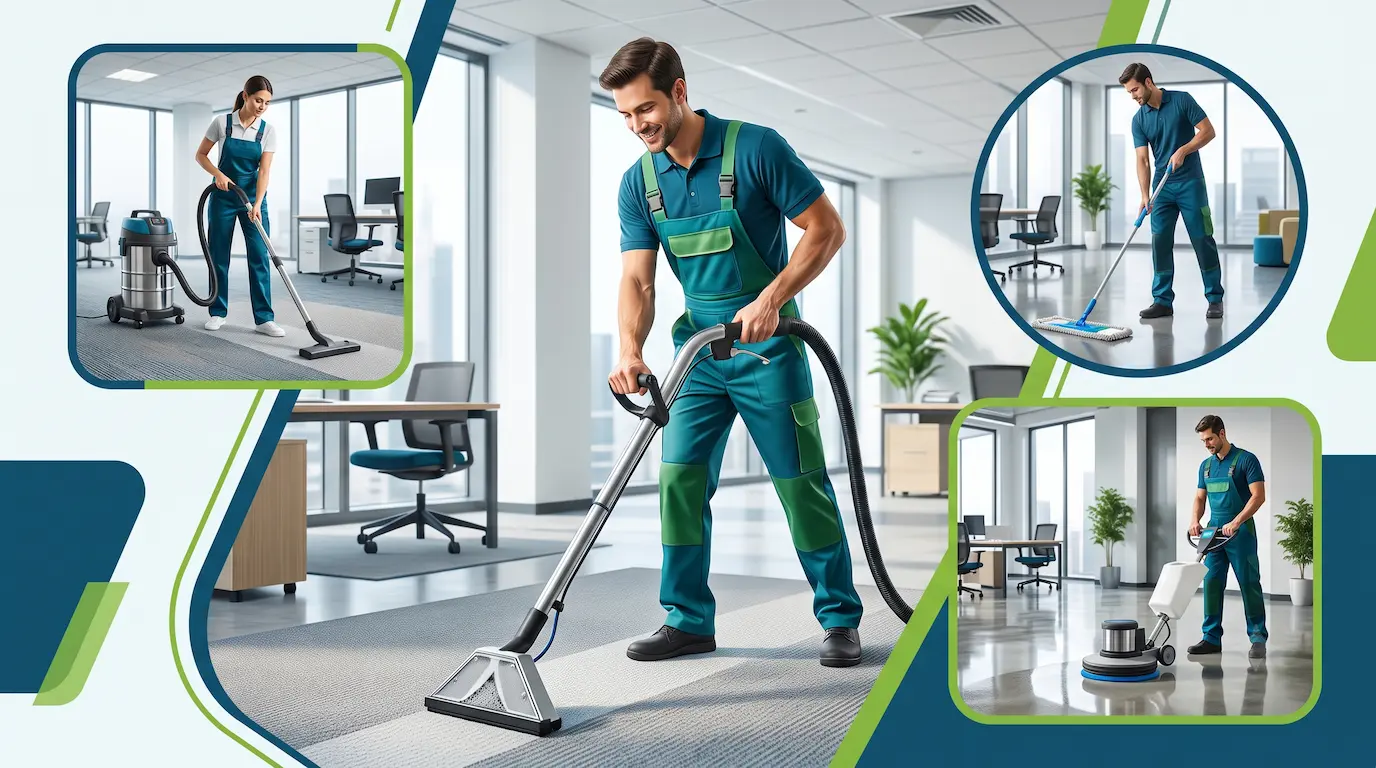
Floors are the largest surface in any office and the first thing to show wear. Carpets trap dirt and dull in the walkways; hard floors scuff, lose their shine and look tired long before they need replacing. The good news is that most floor decline is preventable — the difference between a floor that lasts fifteen years and one that’s threadbare in five is maintenance, not luck. This guide explains how to care for office carpets and hard floors properly.
Quick answer: Office floor care works on two levels. Daily maintenance — vacuuming carpets and mopping hard floors, with entrance matting and high-traffic areas prioritised — removes the abrasive grit that wears floors out. Periodic deep treatment restores them: hot-water extraction for carpets, and strip-seal-polish or buffing for hard floors. Getting the daily routine right protects the investment; scheduled deep cleans extend the floor’s life and keep it looking new. Matching method to floor type is essential.
Why floor care is really about protecting an asset
Office flooring is expensive to install and disruptive to replace, so it pays to treat it as an asset to be maintained rather than a surface to be wiped. Most of the damage that shortens a floor’s life comes from a single culprit: grit. Fine abrasive particles walked in from outside act like sandpaper underfoot, cutting into carpet fibres and scratching hard-floor finishes with every step. Left in place, that grit grinds down walkways and dulls surfaces far faster than age ever would. Effective floor care is, at its heart, about removing that grit consistently before it does its damage — which is why the humble daily vacuum and mop matter more than any occasional deep clean.
There’s a presentation dimension too. Worn walkways, dull floors and visible stains signal neglect even when the rest of the office is spotless, and they’re the kind of thing clients and prospective tenants notice underfoot. Well-maintained floors quietly hold up the impression of a well-run workplace.
Daily maintenance: the routine that protects
The everyday routine is unglamorous but decisive. Done properly, it stops most floor problems before they start:
- Daily vacuuming of carpets to lift grit before it’s ground in
- Mopping of hard floors with the correct product for the surface
- Entrance matting maintained — the first line of defence against tracked-in dirt
- High-traffic areas and walkways prioritised for extra attention
- Spot removal of marks, spills and stains before they set
- Buffing and maintenance of polished and vinyl floors to hold their finish
Entrance matting deserves a special mention: a large proportion of the dirt in any building arrives on the soles of shoes, and good matting stops much of it at the door. It’s the cheapest floor-protection measure there is.
Matching method to floor type
The single biggest mistake in floor care is using the wrong method on the wrong surface — over-wetting a wood floor, using an aggressive product on vinyl, or extracting a carpet that only needed encapsulation. Each floor type has its own needs:
| Floor type | Daily care | Periodic treatment |
|---|---|---|
| Carpet | Vacuuming, prompt spot removal | Hot-water extraction or encapsulation deep clean |
| Vinyl / safety flooring | Mopping, spot cleaning | Strip, seal and polish to restore finish |
| Polished stone / terrazzo | Dust-mopping, damp mopping | Buffing, burnishing and periodic restoration |
| Wood / laminate | Dry or barely-damp mopping | Specialist recoat — never over-wet |
| Tile & grout | Mopping | Deep grout clean and reseal |
A professional contractor identifies each floor type during the survey and specifies the correct daily method and periodic treatment for each — so nothing is damaged by the wrong approach.
Periodic deep treatment: restoring the floor
Even with a perfect daily routine, floors need periodic restorative treatment to reverse the wear that accumulates over months. For carpets, hot-water extraction (deep steam cleaning) lifts the embedded soil that vacuuming can’t reach, revives flattened fibres and removes staining — bringing a tired carpet back close to new. For hard floors, a strip-seal-polish cycle removes old, scuffed layers and lays down fresh protective sealant and polish, while stone and terrazzo are restored by buffing and burnishing. These treatments aren’t a luxury; they’re what keeps a floor out of the “needs replacing” category and are far cheaper than replacement.
The right frequency depends on footfall — a busy reception carpet may need extraction quarterly, a quiet back office annually. This periodic work is often built into an office contract as a scheduled add-on, or delivered as part of a broader deep cleaning programme alongside daily upkeep.
Building floor care into your contract
The most reliable results come from treating daily maintenance and periodic treatment as one joined-up programme rather than separate jobs. Daily cleaning removes the grit that causes wear; scheduled deep cleans reverse the wear that gets through — and because the same provider does both, the floor is looked after consistently and its condition tracked over time. At Crystal Facilities Management, floor care is scoped into every office cleaning contract: correct daily method per surface, entrance-matting management, and periodic extraction, buffing or strip-and-seal on a schedule matched to your footfall — so your floors keep looking good and last as long as they should.
Keep your office floors looking new for longer
Free site survey across London. We’ll specify the right daily method and periodic treatment for every floor type in your office — and price it clearly.
Request your free quoteor call 020 8993 3831
Frequently asked questions
How often should office carpets be deep cleaned?
It depends on footfall. Busy areas such as receptions, corridors and main walkways may need hot-water extraction quarterly, while quieter offices might only need it once or twice a year. Daily vacuuming handles surface dirt, but periodic deep cleaning lifts the embedded grit that vacuuming can’t reach and revives flattened fibres. The right schedule is agreed during a site survey based on how heavily each area is used, so high-wear zones get more frequent treatment than low-traffic ones.
What is strip, seal and polish for hard floors?
It’s the restorative cycle for vinyl and similar hard floors. “Strip” removes the old, scuffed layers of polish and sealant; “seal” lays down a fresh protective base coat; and “polish” applies new finish that gives the floor its shine and protects it from wear. Over time daily traffic dulls and damages the top layers, and stripping back to reseal and repolish restores the floor to near-new condition — far cheaper than replacing it. Frequency depends on footfall and the floor type.
Why do office floors wear out in walkways first?
Because of grit. Fine abrasive particles tracked in from outside concentrate in the paths people walk, and every footstep grinds them into carpet fibres or across hard-floor finishes like sandpaper. That’s why walkways dull and wear long before the rest of the floor. The defences are good entrance matting to stop dirt at the door, and consistent daily vacuuming and mopping to remove grit before it does damage. Prioritising high-traffic areas in the daily routine slows this wear significantly.
Can the same cleaning method be used on all floor types?
No — matching method to surface is essential. Over-wetting a wood floor, using an aggressive product on vinyl or extracting a carpet that only needed encapsulation can cause damage. Carpets need vacuuming and extraction; vinyl needs mopping and strip-seal-polish; stone and terrazzo need buffing and burnishing; wood needs dry or barely-damp mopping. A professional contractor identifies each floor type during the survey and specifies the correct daily method and periodic treatment for each area.
Is floor care included in an office cleaning contract?
Daily floor maintenance — vacuuming carpets and mopping hard floors — is part of a standard office cleaning contract. Periodic deep treatments such as carpet extraction, hard-floor strip-and-seal and stone buffing are usually built in as scheduled add-ons, or delivered through a deep cleaning programme alongside daily upkeep. Combining both under one provider keeps the floor cared for consistently and its condition tracked over time. The exact scope and schedule are agreed during the free site survey.
About The Author