Sustainable office cleaning has moved from a nice-to-have to a procurement expectation. Tenants ask about it, building certifications require it, and staff notice the products used around them all day. But “eco-friendly cleaning” is a broad phrase that covers everything from the chemicals in the bottle to how waste leaves the building. This guide explains what genuinely sustainable office cleaning looks like — and how to tell it apart from greenwashing.
Quick answer: Eco-friendly office cleaning reduces environmental and health impact across four areas: products (certified, low-toxicity, concentrated), equipment (energy-efficient machines, microfibre, reduced water use), process (right-sized dosing, daytime scheduling, less single-use plastic), and waste (proper recycling and responsible disposal). Genuine sustainability is evidenced by recognised certifications and measurable practice — not just a green label on the bottle. It protects indoor air quality and staff wellbeing as much as the planet.
Why sustainable cleaning matters for offices
Cleaning touches the environment in more ways than people assume. Conventional products can release volatile organic compounds that linger in indoor air; single-use wipes and plastic bottles generate waste; and inefficient methods waste water and energy. In an office where staff spend most of their waking hours, the products used on every desk and surface directly affect the air they breathe and, over time, their comfort and wellbeing. Reducing harsh chemicals isn’t only an environmental gesture — it’s an indoor-air-quality and health decision.
There’s a commercial dimension too. Sustainability is now written into supplier questionnaires, ESG reporting and building certifications such as BREEAM and WELL. Landlords and larger tenants increasingly expect their cleaning contractor to demonstrate responsible practice, not just claim it. A cleaning programme that can evidence certified products, reduced consumption and proper waste handling helps the whole building meet its own environmental commitments.
The four pillars of eco-friendly cleaning
Genuine sustainability shows up across the whole operation, not in a single product swap. It comes down to four areas working together:
| Pillar | What good practice looks like |
|---|---|
| Products | Certified, low-toxicity, biodegradable and concentrated chemicals dosed correctly — less waste, safer air |
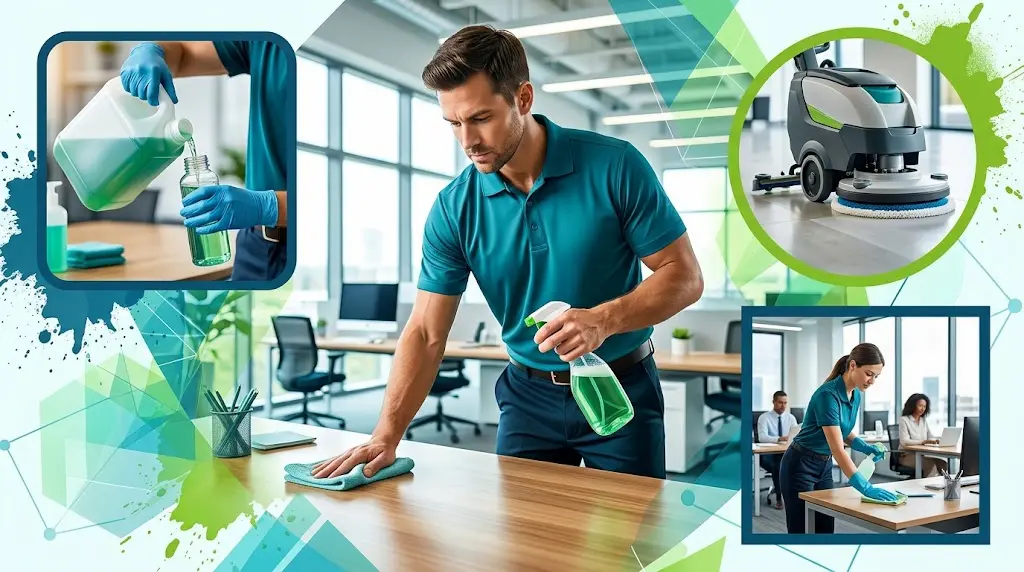
| Equipment | Energy-efficient machines, microfibre cloths and mops, reduced-water methods, HEPA-filtered vacuums |
| Process | Right-sized dosing, daytime scheduling where possible, fewer single-use items, colour-coded reusable kit |
| Waste | Segregated recycling, responsible disposal, minimised packaging and single-use plastic |
A programme that only addresses one pillar — say, greener chemicals but no change to waste or dosing — is a partial effort. Real impact comes from all four moving together.
Products: beyond the green label
The chemical is where most “eco” claims start and stop, so it’s where scrutiny matters most. Genuinely responsible products are certified by recognised schemes, low in toxicity, readily biodegradable, and — importantly — supplied as concentrates that are diluted correctly on site. Concentration matters because it slashes packaging and transport emissions and, when paired with accurate dosing, prevents the overuse that wastes product and harms air quality. A “natural” label with no certification and no dosing discipline behind it is marketing, not sustainability.
COSHH compliance sits alongside this: safe handling, correct storage and proper training aren’t in tension with eco practice — they’re part of it. The goal is products that are effective, safely used, and gentler on both the people in the building and the environment they end up in.
Equipment and method
How cleaning is done matters as much as what’s in the bottle. Microfibre cloths and mops lift dirt and microbes with far less chemical and water than traditional cotton, and they’re reusable. Energy-efficient machines and HEPA-filtered vacuums cut power use and improve the air rather than recirculating fine dust. Reduced-water methods and correct dosing systems stop the two most common forms of waste — using too much product and too much water. Even scheduling plays a part: daytime cleaning, where the building is already lit and heated, avoids running a night shift purely for the cleaners.
Waste and consumables
A large share of an office’s environmental footprint from cleaning is waste-related. Responsible programmes segregate recycling properly, dispose of waste through the right routes, and cut single-use plastic wherever possible — refillable dispensers instead of individual bottles, recycled-content paper consumables, and bulk supply that reduces packaging. Managing washroom and kitchen consumables well is part of this: choosing recycled and responsibly sourced products, and replenishing them efficiently so nothing is over-ordered or wasted.
How to spot genuine sustainability
The simplest test is evidence. Ask a provider to show recognised product certifications, describe their dosing and equipment, explain how they handle waste and recycling, and point to any accreditations or reporting that back it up. Vague claims — “we use eco products” — without specifics are a warning sign. Credible sustainability is specific, measurable and documented, and it should sit comfortably alongside the compliance and quality standards you’d expect from any professional contractor.
At Crystal Facilities Management, environmentally responsible products and methods are built into our standard office cleaning service — COSHH-compliant, certified products, microfibre and efficient equipment, and proper waste and recycling handling — so a sustainable clean doesn’t mean a compromise on results.
Want a cleaner office with a smaller footprint?
Free site survey across London. We’ll build a sustainable specification around certified products, efficient methods and responsible waste handling.
Request your free quoteor call 020 8993 3831
Frequently asked questions
What is eco-friendly office cleaning?
Eco-friendly office cleaning reduces environmental and health impact across four areas: products (certified, low-toxicity, concentrated chemicals), equipment (energy-efficient machines, microfibre, reduced water use), process (correct dosing, daytime scheduling, fewer single-use items) and waste (proper recycling and responsible disposal). It protects indoor air quality and staff wellbeing as well as the environment. Genuine sustainability is evidenced by recognised certifications and measurable practice, not just a green label.
Are eco-friendly cleaning products as effective as conventional ones?
Yes. Modern certified products are formulated to clean and sanitise effectively while being lower in toxicity and readily biodegradable. Effectiveness depends more on correct dosing and method than on harshness — microfibre and properly diluted concentrates achieve professional results with less chemical and water. The aim is products that are effective, safely used under COSHH, and gentler on the people in the building and the environment, so sustainability doesn’t mean a compromise on cleanliness.
Does sustainable cleaning cost more?
Not necessarily. Concentrated products and reusable microfibre can reduce consumable costs over time, and efficient equipment lowers water and energy use. Pricing depends on the overall scope, hours and specification rather than the choice to clean sustainably. Because every office differs, cost is quoted per contract after a free site survey. Many clients find a responsible specification is cost-neutral or better once reduced waste and consumption are taken into account.
How does eco cleaning help with building certifications like BREEAM or WELL?
Building certifications and ESG reporting increasingly assess environmental practice, indoor air quality and responsible procurement. A cleaning programme that uses certified low-toxicity products, efficient equipment, correct dosing and proper waste segregation supports those criteria and provides evidence for supplier questionnaires and reporting. A contractor who can document certifications and practice helps the whole building meet its own environmental commitments rather than undermining them.
How can I tell if a cleaning company is genuinely sustainable?
Ask for evidence. A credible provider can show recognised product certifications, describe their dosing systems and equipment, explain how they handle waste and recycling, and point to accreditations or reporting that back it up. Vague claims like “we use eco products” without specifics are a warning sign of greenwashing. Genuine sustainability is specific, measurable and documented, and sits alongside the compliance and quality standards you’d expect from any professional contractor.
About The Author