The office washroom is where people form their sharpest judgement about how a workplace is run. It’s also the highest-risk area for hygiene and the one most likely to generate complaints when it slips — an empty soap dispenser or a bin overflowing by mid-afternoon undoes an otherwise spotless office. This guide covers what proper washroom hygiene involves, why consumables management is half the battle, and how to keep facilities reliably stocked and clean.
Quick answer: Office washroom hygiene combines two things: thorough cleaning and sanitising of high-touch and high-risk surfaces, and proactive consumables management so soap, toilet roll and hand towels never run out. The best programmes pair a daily deep service with day-porter checks, use colour-coded equipment to prevent cross-contamination, control odour and limescale, and manage stock so replenishment is planned, not reactive. A well-run washroom protects health and signals a well-run business.
Why washrooms carry outsized weight
Washrooms punch above their size in both hygiene risk and reputation. They combine moisture, heavy footfall and constant hand contact — the perfect conditions for germs to spread via taps, flush handles, door furniture and dispensers. They’re also the space visitors and staff scrutinise most: research consistently shows people equate washroom cleanliness with a company’s overall standards, and a poor washroom experience colours their view of everything else. A single lapse — no soap, no paper, a lingering smell — is remembered far longer than a week of quiet reliability.
That’s why washrooms need more attention than almost any other area of an office, and why they’re the first place a cutting-corners cleaning contract shows. Getting them right is partly about cleaning technique and partly about never letting supplies run dry.
What proper washroom cleaning involves
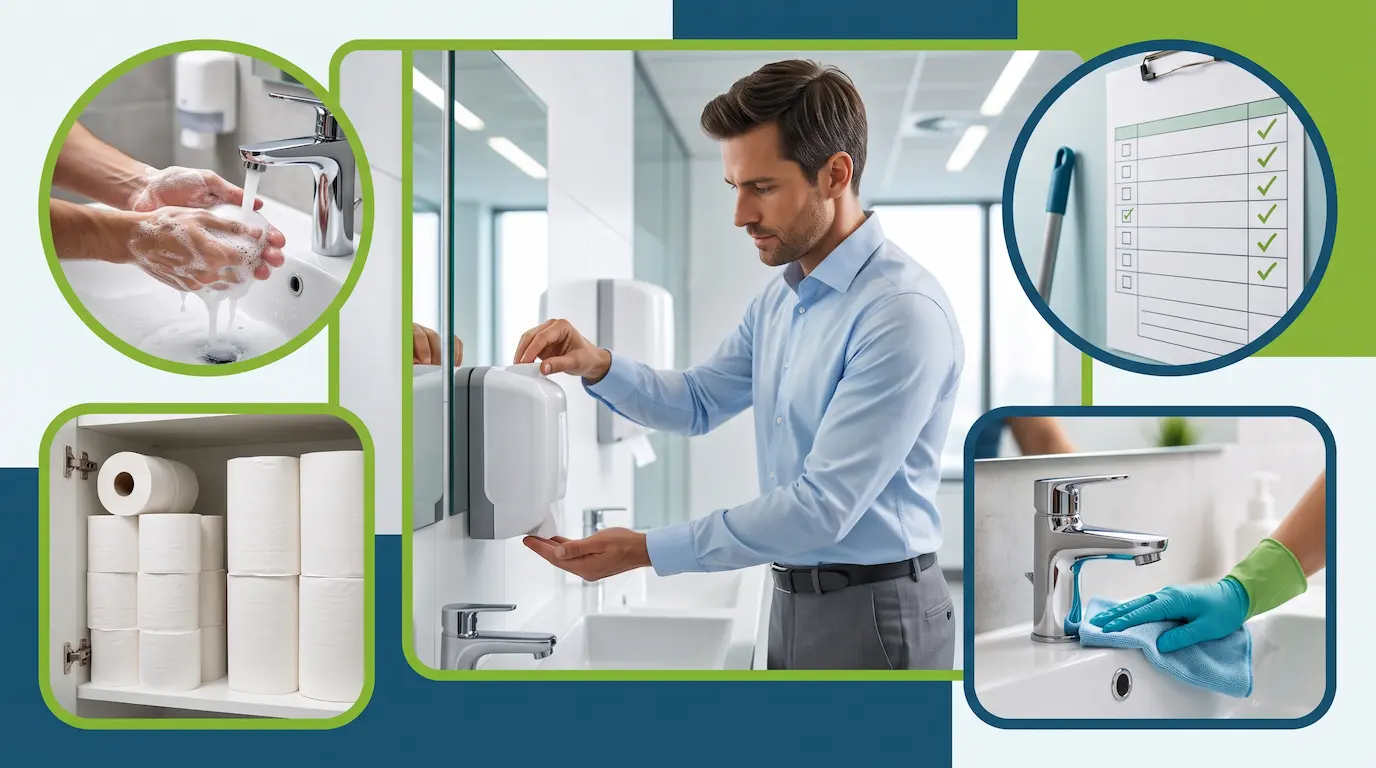
A thorough washroom service goes well beyond a quick wipe. The core elements repeat daily, with high-touch sanitisation as the priority:
- Toilets, urinals, basins, taps and tiles cleaned and sanitised
- High-touch points — flush handles, locks, door furniture, dispensers
- Mirrors and fixtures wiped and polished
- Floors mopped and disinfected, corners and grout addressed
- Bins emptied, sanitary and clinical waste handled correctly
- Odour control and regular descaling to prevent limescale build-up
Colour coding is essential here: washroom cloths and equipment are kept strictly separate from those used in kitchens and offices to prevent cross-contamination. This is a basic infection-control discipline that a professional contractor applies without being asked.
Consumables: the half everyone underestimates
You can clean a washroom perfectly at 7am and still get a complaint at 3pm — because it ran out of hand towels. Consumables management is the quiet half of washroom hygiene, and the one most likely to fail without a system. Proactive management means tracking usage, stocking sensibly ahead of demand, and replenishing on a schedule rather than waiting for the empty dispenser. It’s the difference between a facility that’s reliably ready and one that’s a gamble depending on the time of day.
| Consumable | Management priority |
|---|---|
| Soap & sanitiser | Never empty — critical for hand hygiene; refillable dispensers reduce waste |
| Toilet roll | Stocked ahead of peak usage; bulk supply for high-footfall sites |
| Hand towels / dryers | Towels replenished on schedule; dryers checked and cleaned |
| Sanitary & clinical waste | Serviced units and correct disposal routes, compliant with regulations |
| Air care / odour control | Maintained units to keep facilities fresh between cleans |
Whether consumables are managed by the cleaning provider or supplied by the client should be agreed and itemised in the contract — so there’s never ambiguity about who keeps the dispensers full.
Daily service plus day-porter checks
The most reliable washrooms combine a thorough daily clean with lighter checks through the day. An overnight or early-morning service resets everything to a high standard; a day porter then circulates during peak hours to top up consumables, wipe high-touch points and deal with issues before anyone notices them. In high-footfall offices, coworking spaces and client-facing headquarters, that daytime presence is what keeps a washroom at 3pm looking the way it did at 8am. For a fuller comparison of daytime versus overnight models, see our guide to day cleaning versus out-of-hours cleaning.
Odour, limescale and the long game
Two problems quietly degrade washrooms over time if they’re not managed: odour and limescale. Odour control means maintained air-care units and, more importantly, cleaning that removes the source rather than masking it — proper attention to floors, drains, urinals and grout. Limescale, common in London’s hard-water area, builds on taps, tiles and porcelain and makes surfaces look permanently dirty even when they’re clean. Regular descaling as part of the routine keeps fixtures looking and functioning well and prevents the gradual decline that ends in an expensive deep clean or refit.
Washroom hygiene, handled properly
At Crystal Facilities Management, washroom cleaning and consumables management are a core part of every office cleaning contract — daily sanitising to a defined standard, colour-coded equipment, planned consumables replenishment, and day-porter checks where the footfall demands it. It’s specified during the free site survey and audited against, so the washroom stays a strength of your workplace rather than its weak point.
Never run out of soap again
Free site survey across London. We’ll build washroom cleaning and consumables management into your specification — planned, stocked and audited.
Request your free quoteor call 020 8993 3831
Frequently asked questions
What does office washroom cleaning include?
A thorough washroom service covers cleaning and sanitising toilets, urinals, basins, taps and tiles; disinfecting high-touch points such as flush handles, locks and dispensers; wiping mirrors and fixtures; mopping and disinfecting floors; emptying bins and handling sanitary and clinical waste correctly; and odour control with regular descaling. Colour-coded equipment keeps washroom cloths strictly separate from kitchen and office kit to prevent cross-contamination. High-touch sanitisation is the daily priority.
Who is responsible for restocking washroom consumables?
It depends on the contract. Many providers manage and replenish soap, toilet roll, hand towels and other consumables as part of the service, tracking usage and stocking ahead of demand so nothing runs out. Alternatively, the client supplies consumables and the cleaner replenishes from that stock. Whichever applies should be agreed and itemised in the contract so there’s never ambiguity about who keeps the dispensers full. Proactive, scheduled management is what prevents mid-afternoon shortages.
How often should office washrooms be cleaned?
Most offices have washrooms serviced thoroughly at least once a day, usually overnight or early morning, with the frequency scaling to footfall. High-traffic or client-facing washrooms benefit from additional day-porter checks through the day to top up consumables, wipe high-touch points and address issues before they’re noticed. The right frequency is agreed during a site survey based on how many people use the facilities and the standard the workplace needs to maintain.
Why do office washrooms smell even after cleaning?
Persistent odour usually means the source hasn’t been removed, only masked. Effective odour control comes from cleaning that addresses floors, drains, urinals and grout where smells originate, combined with maintained air-care units. Limescale build-up, common in London’s hard-water area, can also trap grime and make surfaces look and smell unclean. Regular descaling and thorough source-cleaning fix the problem properly, rather than relying on air freshener to cover it.
How do you prevent cross-contamination in washroom cleaning?
Through colour coding — a standard infection-control discipline where cloths, mops and equipment are assigned distinct colours for different areas, so washroom kit is never used in kitchens or offices and vice versa. Combined with correct use of sanitising products, safe waste handling and trained operatives, colour coding breaks the routes by which germs spread between areas. A professional contractor applies this as standard practice without needing to be asked.
About The Author