
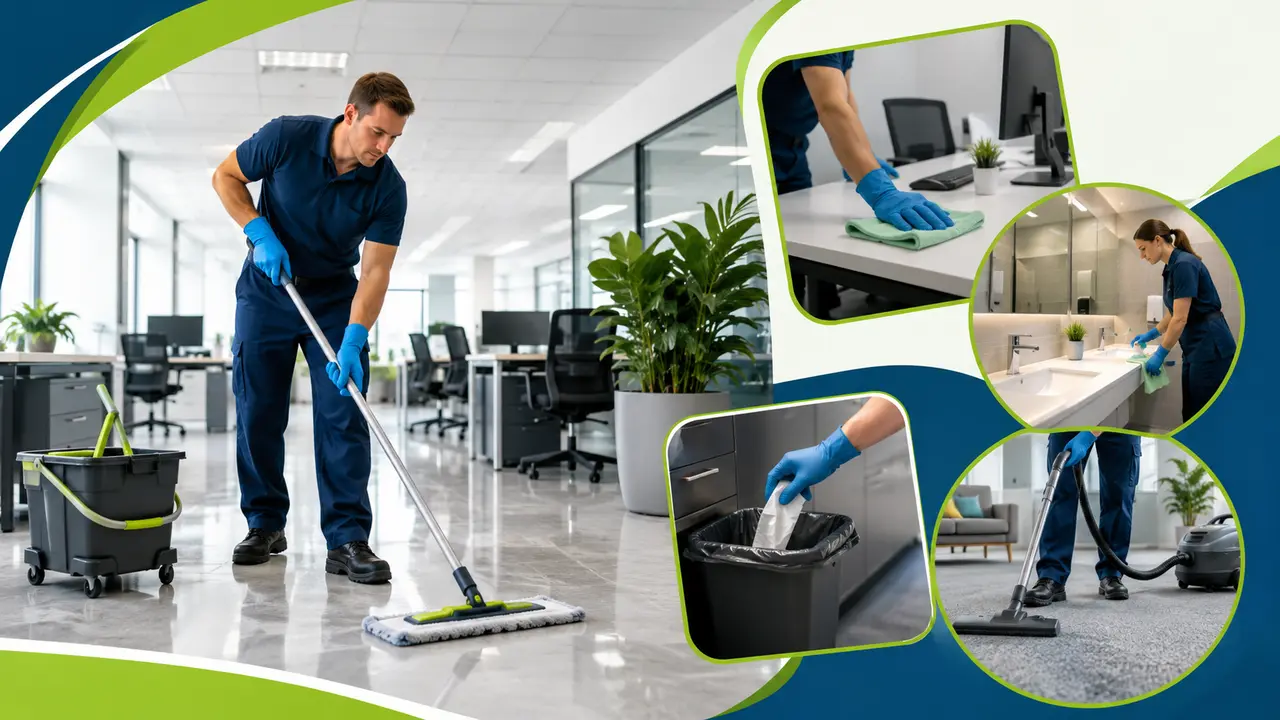
“How often should we have the office cleaned?” is one of the first questions facilities and office managers ask — and the honest answer is that it depends on how your space is used, not on a fixed rule. Clean too little and standards and hygiene slip; pay for daily service you don’t need and you’re wasting budget. This guide breaks down the realistic frequency options, which areas need attention most often, and how to land on the right schedule for your building.
Quick answer: Busy, client-facing or high-footfall offices are usually best cleaned daily, while smaller teams and hybrid workplaces often work well with two or three visits a week. Regardless of the overall frequency, washrooms and kitchens need the most frequent attention, and high-touch points should be sanitised every visit. The right schedule is set by your headcount, footfall, layout and how client-facing the space is — confirmed at a site survey.
What determines the right cleaning frequency
There’s no universal answer because offices differ enormously in how they’re used. A few factors do most of the work in setting the right schedule: how many people use the space and how densely; how much footfall it takes from visitors and clients; how client-facing it is, so how much presentation matters; the layout and floor area; and the balance of hard floors, carpet, kitchens and washrooms. A quiet 10-person studio and a client-facing City floor of 200 people have completely different needs, even at the same square footage. The goal is to match frequency to actual use — enough to keep standards and hygiene consistent, without paying for visits that add little.
Typical frequency options
Most office contracts land on one of a few common patterns, which can be mixed — for example a daily communal clean with less frequent attention to quieter zones:
| Frequency | Best suited to |
|---|---|
| Daily (5 days) | Busy, client-facing or high-footfall offices; larger headcounts; spaces where presentation matters every day |
| 2–3 times a week | Smaller teams and hybrid workplaces with lower daily occupancy, often with a rotating focus |
| Daily + day porter | High-traffic buildings, coworking and reception-heavy sites needing continuous touch-ups through the day |
| Weekly | Very small or lightly used offices, usually paired with more frequent washroom and kitchen attention |
| Periodic deep clean | All offices — a quarterly or twice-yearly reset alongside the regular schedule, not a substitute for it |
Frequency and hours drive the resourcing — a five-day daily contract covers far more than two visits a week, which is why schedule is agreed before pricing.
Not every area needs the same frequency
One of the most useful things to understand is that “how often should the office be cleaned” isn’t a single number — different areas justify different frequencies. Washrooms and kitchens are hygiene-critical and typically need attention every visit regardless of the overall schedule, because that’s where problems and complaints concentrate. High-touch points — door handles, switches, lift buttons, shared equipment — should be sanitised each visit too. Desks, floors and communal areas can flex with occupancy. Quieter zones like storage or rarely used meeting rooms can sit on a lighter rotation. A good specification sets frequency area by area rather than applying one blanket figure to the whole building.
Signs your frequency is wrong
The schedule that suited your office two years ago may not fit it now, especially with hybrid working changing how space is used. A few signs suggest it’s time to review:
- Recurring complaints about washrooms or kitchens between visits
- Visible build-up in high-traffic areas by the end of the day
- Paying for daily cleaning of floors that are barely occupied midweek
- Occupancy that has shifted a lot since the schedule was set
- Consumables running out before the next visit
- The office never feeling quite client-ready when it needs to be
Getting the frequency right for your office
The reliable way to set frequency is a site survey — walking the space, understanding occupancy and footfall, and matching the schedule to how each area is actually used rather than guessing. It’s also worth reviewing periodically as the business changes. As a practical floor, Crystal office cleaning contracts start from a minimum of 10 hours per week, which keeps the service properly resourced whatever the pattern; the exact hours and schedule are confirmed after the survey. Whatever frequency you land on, make sure it’s written into the specification area by area, so “regular” means something specific and measurable rather than a vague promise.
Not sure how often your office needs cleaning?
Free site survey across London. We assess your space and occupancy and recommend the right frequency, area by area — then quote it transparently.
Request your free quoteor call 020 8993 3831
Frequently asked questions
How often should an office be cleaned?
Busy, client-facing or high-footfall offices are usually best cleaned daily, while smaller teams and hybrid workplaces often work well with two or three visits a week. Regardless of the overall frequency, washrooms and kitchens need the most frequent attention and high-touch points should be sanitised every visit. The right schedule depends on headcount, footfall, layout and how client-facing the space is.
Does my office need daily cleaning?
Not necessarily. Daily cleaning suits busy, client-facing or high-footfall offices and larger headcounts. Smaller or hybrid workplaces with lower daily occupancy often manage well with two or three visits a week, sometimes with a rotating focus so nothing is neglected. A site survey is the reliable way to match frequency to how your space is actually used.
Which areas need cleaning most often?
Washrooms and kitchens are hygiene-critical and typically need attention every visit regardless of the overall schedule, because that’s where problems and complaints concentrate. High-touch points such as door handles, switches and lift buttons should also be sanitised each visit. Desks, floors and quieter zones can flex with occupancy on a lighter rotation.
How has hybrid working changed office cleaning frequency?
Hybrid working has made occupancy far less even, with busy days midweek and quiet ones at either end. Many offices now match frequency to peak days or use a day porter on busy days rather than a flat daily schedule. It’s worth reviewing your frequency if occupancy has shifted significantly since the schedule was set, so you’re neither under-cleaning nor overpaying.
Should cleaning frequency be set for the whole office or by area?
By area. A good specification sets frequency room by room rather than applying one blanket figure — washrooms and kitchens more often, desks and communal areas with occupancy, quieter zones on a lighter rotation. This keeps hygiene-critical areas to standard while avoiding paying for unnecessary visits to spaces that barely get used.
About The Author