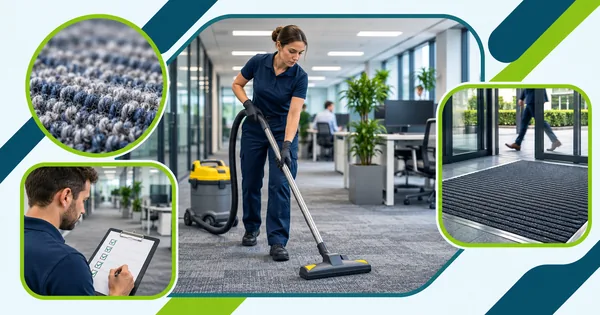

An entrance that is clean before opening can become wet and untidy during the morning arrival period. A winter office entrance cleaning plan should respond to weather and footfall, not rely entirely on the evening clean. For busy receptions, a day porter or daytime cleaning arrangement can provide that extra observation and response.
Map the route from the door to the workspace
Look beyond the first mat. Follow the route through reception, lifts, stairs and adjoining corridors to see where moisture and debris travel. Note sheltered and exposed doors, delivery entrances and places where people pause with umbrellas.
Ask reception and cleaning staff where they regularly see problems. A recurring wet patch may indicate a leaking door or damaged threshold that needs maintenance, rather than simply more cleaning.
Separate prevention, inspection and response
Use entrance matting suitable for the location and keep it maintained. Check for saturation, movement and damaged edges through the day. Agree where wet umbrellas are stored so water is not carried across the lobby.
HSE notes that cleaning itself can introduce slip hazards. The method must suit the floor, and access needs to be controlled until the surface is safe to use. See HSE’s floor-cleaning guidance. A warning sign alone should not replace a practical plan for keeping people away from an affected area.
Give the day porter a clear inspection brief
- Check entrance conditions at opening and around busy arrival periods.
- Adjust observations when weather or footfall changes.
- Respond to reported spills using the approved site method.
- Report loose mats, leaks and floor damage to the building contact.
- Keep cleaning equipment and leads out of circulation routes.
- Hand over unresolved issues before leaving the shift.
These are planning prompts rather than a universal inspection frequency. Set the actual intervals through your site assessment and experience of the entrance.
Connect reception and cleaning communications
Reception often notices a problem before a scheduled inspection. Give staff one contact route and a simple location description. Agree who attends if the day porter is already dealing with another task, and who can arrange temporary access restrictions.
Record when the issue was reported, the response and whether maintenance support was needed. That helps distinguish a one-off spill from a repeating building defect.
Review the plan after wet-weather days
Check whether mats coped with demand, whether response coverage matched opening hours and whether the clean left any residue. Update the plan based on observations. If additional daytime work becomes routine, record it as a service variation rather than letting it displace another task unnoticed.
The surrounding carpet programme also matters. Our high-traffic office carpet guide explains the wider maintenance context; entrance monitoring and periodic carpet care serve different purposes.
Frequently asked questions
Does an evening clean cover wet-weather arrivals?
It prepares the building for opening, but conditions can change during the day. Agree how changing entrance conditions will be monitored and addressed.
Should inspection times be identical every day?
Use your site assessment to set a baseline, then respond to weather, footfall and reported issues rather than assuming every day has the same demand.
Discuss your site requirements
For help applying this plan to your premises, explore Crystal’s commercial cleaning services. Share your location, access arrangements and scope through our enquiry form so the team can discuss a suitable service.
About The Author