Back-to-back meetings leave little time to remove cups, wipe tables and prepare the room for the next group. A meeting room cleaning turnaround works best when the booking team, room users and cleaners agree the same release time and the same definition of ready. This checklist helps office managers organise that handover.
Start with the booking gap
Look at the interval between the first group leaving and the next group arriving. That is the actual reset window, which can be shorter than the diary suggests when meetings overrun. Avoid promising a full reset in a window that does not allow access and drying time.
Identify rooms with catering, external visitors or frequent large meetings. They may need a different service from a small internal meeting space. Keep the allocation based on use rather than giving every room an identical routine.
Agree the core room reset
- Confirm the room is released and guests have left.
- Remove agreed catering waste and used service items through the correct route.
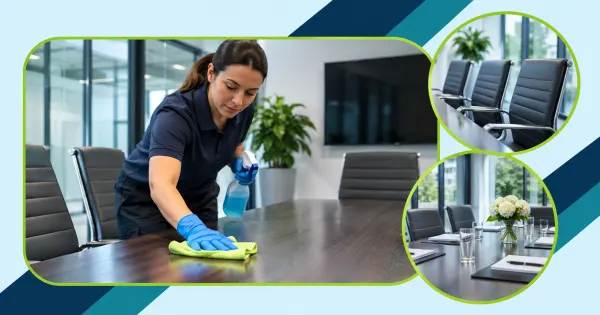
- Clean accessible table surfaces using the approved method.
- Check seating, visible floor debris and accessible touchpoints.
- Report spills, damaged furniture or equipment faults.
- Return the agreed room layout and confirm readiness.
Room users should take confidential papers and personal belongings with them. Catering equipment, display screens and conferencing controls need clear ownership so cleaners do not make unauthorised adjustments.
Keep exception handling separate from the standard reset
A spilled drink on upholstery or a broken glass needs a suitable response, not a rushed wipe to meet the next booking. The team should know who can delay entry, arrange another room and notify the next host. Do not mark the room ready while an unresolved issue makes it unsuitable for use.
Record the exception and the action taken. If the same room repeatedly needs additional work after catered meetings, use that evidence to revise the booking buffer or cleaning allocation.
Use a small readiness record
A short record can include room name, booking end time, access time, reset completion and exceptions. It should help reception respond to the next host, not become a long administrative task. Avoid recording confidential meeting subjects or attendee details in a cleaning log.
For example, “Room B: ready 11:10; screen fault passed to IT” separates cleaning completion from a technical problem. A single “done” tick would not communicate the outstanding issue.
Schedule periodic work outside the reset window
Detailed carpet care, high-level dusting and deep cleaning belong in a separate planned programme. Between-booking work is a quick operational reset. See our commercial deep-cleaning guidance only where relevant to your service plan; the exact periodic scope should be agreed with the provider.
Review missed access, overruns and host feedback together. If the cleaning is consistently completed but rooms still start late, the booking process may need adjustment. If resets exceed their allocated window, check the scope and resources before changing the standard.
Frequently asked questions
Can cleaners reset a room while a meeting continues?
Only where an agreed arrangement allows this without interrupting the meeting or compromising privacy. Normally, the host should release the room first.
Is equipment setup part of cleaning?
It should be separately agreed. Cleaning staff should not be expected to troubleshoot conferencing equipment or reconnect devices unless explicitly trained and authorised.
Discuss your site requirements
For help applying this plan to your premises, explore Crystal’s office cleaning services. Share your location, access arrangements and scope through our enquiry form so the team can discuss a suitable service.
About The Author