
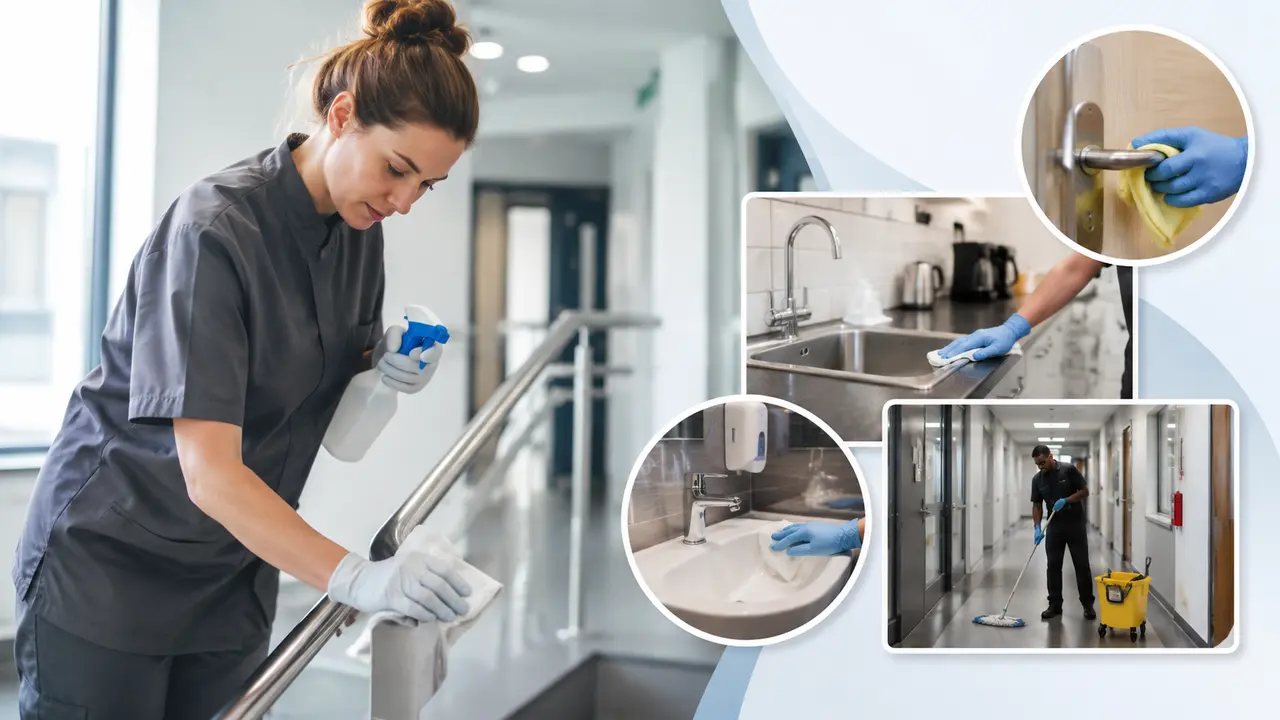
Student halls pack hundreds of people into shared kitchens, bathrooms and corridors — an environment where a cold or a stomach bug spreads through a block in days. Term-time cleaning isn’t just about appearance; done well, it’s a practical part of infection control. This guide explains why halls are high-risk, what an infection-control cleaning routine looks like, and how frequency should flex through the year.
Quick answer: Consistent term-time cleaning helps limit the spread of illness in student halls by keeping high-touch surfaces — door handles, handrails, switches, kitchen and washroom touchpoints — regularly sanitised with COSHH-compliant products. It’s most effective when frequency flexes around peak periods and reported outbreaks, and when it’s delivered by trained operatives following an agreed routine.
Why halls are high-risk for illness
Student accommodation combines everything that helps illness spread: high density, shared facilities, a young population mixing constantly, and a calendar that brings a new cohort together from all over the country at the start of term — the classic conditions for the seasonal wave of coughs, colds and stomach bugs that halls are known for. Shared kitchens and bathrooms concentrate the risk, because dozens of people touch the same taps, handles and surfaces every day. No cleaning routine eliminates illness, but consistent, targeted cleaning of the surfaces people actually touch is one of the most practical measures available to reduce transmission.
What an infection-control routine focuses on
| Focus | Why it matters |
|---|---|
| High-touch surfaces | Door handles, handrails, light switches, lift buttons and access panels are touched constantly and transfer germs between residents |
| Shared kitchens | Taps, worktops, handles and appliance controls are hotspots where hands, food and surfaces meet |
| Shared bathrooms | Toilets, flush handles, taps and surfaces need regular sanitising to control spread |
| Correct products | COSHH-compliant cleaning and sanitising products, used correctly by trained operatives |
| Responsive frequency | Increasing frequency during peak illness periods or a reported outbreak |
Infection-control cleaning supports, but doesn’t replace, wider measures like resident hygiene guidance and adequate ventilation.
How frequency should change through the year
A fixed, year-round schedule misses the point of infection control, which is about responding to risk. The start of term, when a new cohort arrives and mixes, is a natural high point. Winter brings the seasonal cold and flu peak. Exam season concentrates stress and long hours. And any reported outbreak — a norovirus cluster on one floor, say — should trigger a temporary increase in cleaning frequency and a tighter focus on the affected areas. A good contract builds in the ability to flex up during these periods rather than treating every week the same.
Practical measures that work alongside cleaning
- Regular sanitising of high-touch points, not just visible surfaces
- Increased frequency during peak illness periods and outbreaks
- Well-stocked soap and hand towels in shared washrooms
- Prompt attention to shared kitchens and bathrooms
- Trained operatives following a documented routine
- Clear communication between cleaning team and accommodation staff
The role of trained operatives and the right products
Infection-control cleaning is only as good as the people and products behind it. Sanitising a surface with the wrong product, or wiping in a way that just moves germs around, achieves little. Trained operatives working to an agreed routine — correct products, correct dwell times, correct sequence so clean areas aren’t re-contaminated — are what make the difference. COSHH-compliant products used correctly protect both residents and cleaning staff. That’s why a documented, supervised routine matters far more than simply cleaning more often with no method behind it.
Protect your residents with a proper cleaning routine
Free site survey across London. We set an infection-control routine for your halls, with the flexibility to step up during peak periods — quoted transparently.
Request your free quoteor call 020 8993 3831
Frequently asked questions
Does cleaning really reduce the spread of illness in halls?
It’s one of the most practical measures available. No routine eliminates illness, but consistent sanitising of high-touch surfaces — door handles, handrails, switches, kitchen and washroom touchpoints — with the right products reduces transmission in a dense, shared environment. It works best alongside resident hygiene guidance and good ventilation.
What are high-touch surfaces in student accommodation?
High-touch surfaces are the points many residents contact repeatedly: door handles, handrails, light switches, lift buttons, access panels, kitchen taps and worktops, and bathroom flush handles and taps. These transfer germs between people far more than floors or walls, so they’re the priority in an infection-control routine.
Should cleaning frequency increase during an outbreak?
Yes. A reported outbreak — such as a norovirus cluster on a floor — should trigger a temporary increase in cleaning frequency and a tighter focus on the affected areas and their high-touch surfaces. A good contract builds in the ability to flex up during peak periods and outbreaks rather than keeping every week the same.
What products are used for infection-control cleaning?
COSHH-compliant cleaning and sanitising products, used correctly by trained operatives with the right dwell times and sequence so clean areas aren’t re-contaminated. Using the correct products in the correct way protects both residents and cleaning staff and is what makes the routine effective.
Can you increase cleaning during winter and the start of term?
Yes. The start of term, the winter cold and flu peak, and exam season are natural high-risk periods, and the cleaning schedule can be stepped up around them. The flexible frequency is agreed in your specification so the routine responds to risk rather than staying fixed year-round.
About The Author