
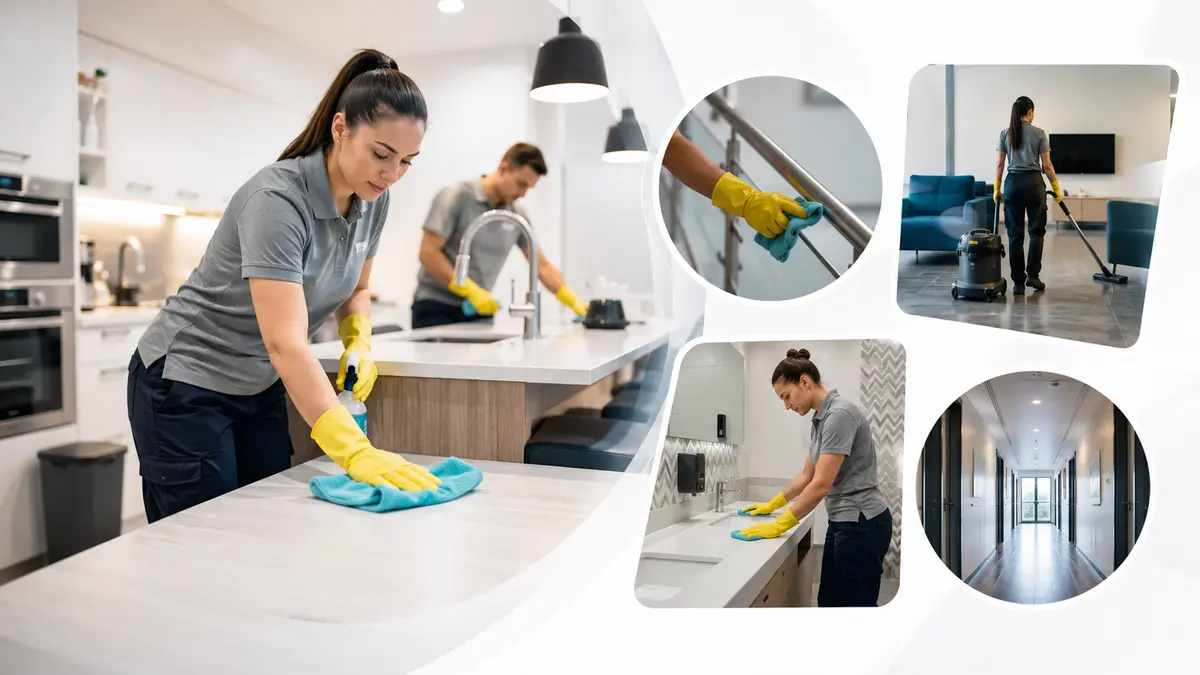
Ask any accommodation manager where the cleaning complaints come from and the answer is almost always the same: the shared kitchen. Communal areas — cluster kitchens, common rooms, corridors and shared bathrooms — are where a student building is judged, and where hygiene problems start. This guide explains why they need regular professional cleaning, what good scope looks like, and how often each area should be done.
Quick answer: Shared student kitchens and communal areas need regular, scheduled professional cleaning because they take intense, all-day use from many residents and are the main source of hygiene issues and complaints. A good communal clean covers kitchens, common rooms, corridors, stairwells and shared bathrooms, with high-touch surfaces sanitised and a periodic degrease and deep-clean cycle on kitchens.
Why communal areas build up mess so fast
A cluster kitchen shared by six to twelve students is used for every meal, every day, by people with different standards and schedules. Grease, food debris, spills and bin overflow accumulate far faster than in a domestic kitchen, and no single resident feels responsible for the shared mess. Common rooms, corridors and stairwells carry constant footfall; shared bathrooms see heavy daily use. Left to residents alone, these spaces decline quickly — which is why scheduled professional cleaning of communal areas is the backbone of any term-time contract.
What a good communal clean covers
| Area | What it covers |
|---|---|
| Cluster & shared kitchens | Worktops, sinks, taps, splashbacks and tables cleaned and sanitised; appliance exteriors wiped; floors swept and mopped; waste and food caddies managed |
| Common rooms & social spaces | Surfaces, seating and tables wiped; floors vacuumed or mopped; tidied and reset; bins emptied |
| Corridors & stairwells | Vacuumed and mopped; handrails and high-touch points sanitised; entrance matting cleaned |
| Shared bathrooms | Toilets, showers, basins and tiles cleaned, descaled and sanitised; floors mopped; consumables restocked where included |
| High-touch points | Door handles, light switches, lift buttons, handrails and shared equipment |
Deep tasks — full kitchen degrease, oven interiors, descaling — sit on a periodic cycle or in the summer turnaround rather than every visit.
How often should communal areas be cleaned?
Frequency depends on occupancy and use, but the general pattern in busy student accommodation is that shared kitchens and bathrooms need the most attention, followed by high-traffic corridors and common rooms. Many schemes run communal cleaning several times a week, with daily or day-porter cover in larger, high-footfall buildings. Frequency should flex around peak periods — the start of term, exam season and any reported hygiene issues — rather than being fixed and forgotten. The right pattern is agreed during a site survey based on how your building is actually used.
The hygiene case
- Shared kitchens are the top source of pests and odour if neglected
- High-touch surfaces spread illness fast in dense buildings
- Clean communal spaces reduce complaints and protect reviews
- Consistent standards support re-lettings and occupancy
- Regular upkeep makes the summer turnaround far easier
Whose job is it — residents or the provider?
Students are typically responsible for their own bedrooms and for basic tidying, but shared communal areas are the operator’s responsibility to keep to a hygienic standard — and trying to leave cluster kitchens entirely to residents is where problems build. A clear split works best: residents keep their rooms and clear up after themselves, while a professional team handles scheduled communal cleaning, high-touch sanitising and the periodic deep-clean cycle. That combination keeps standards up without relying on goodwill.
Keep your communal areas to standard
Free site survey across London. We scope your kitchens, common rooms and shared spaces and set a schedule that fits how your building is used — quoted transparently.
Request your free quoteor call 020 8993 3831
Frequently asked questions
Who cleans shared kitchens in student accommodation?
Shared and cluster kitchens are the operator’s responsibility to keep to a hygienic standard, usually through a professional cleaning contract. Residents are expected to clear up after themselves, but scheduled professional cleaning handles the wider surfaces, high-touch sanitising and periodic deep degrease that residents can’t be relied on to do.
How often should communal areas be cleaned?
It depends on occupancy and use, but shared kitchens and bathrooms need the most frequent attention, followed by corridors and common rooms. Many schemes clean communal areas several times a week, with daily or day-porter cover in larger buildings, flexing frequency around the start of term, exams and any reported issues.
Are deep kitchen cleans included in regular communal cleaning?
Full kitchen degrease, oven interiors and descaling usually sit on a periodic cycle or in the summer turnaround rather than every visit. Regular communal cleaning keeps surfaces, floors and high-touch points to standard between those deep cleans. Both should be defined in your specification.
Do clean communal areas really reduce complaints?
Yes. Communal spaces — especially shared kitchens and bathrooms — are where most cleaning complaints originate and where reviews are shaped. Consistent, scheduled cleaning keeps these hotspots hygienic, reduces odour and pest risk, and protects both the resident experience and re-lettings.
Can you provide day porters for busy buildings?
Yes. In larger, high-footfall schemes, day porters keep communal areas, kitchens and washrooms continuously clean during the day, alongside a scheduled clean. This is popular for big PBSA buildings and during peak periods such as arrival weekends. The pattern is agreed during a free site survey.
About The Author